Understanding Heating Space Requirements
This entry was posted on January 27, 2026
Understanding Heating Space Requirements
Choosing the right heating solution for a space isn’t just about comfort, it’s about efficiency, safety, and long‑term performance. Whether you’re heating a room addition or a large utility building, properly sizing your heat source ensures that you maintain your desired temperature without overloading your electrical system or wasting energy.
Below, we break down key concepts, simple rules of thumb, and real‑world examples to help determine the appropriate heating capacity for any space.
The Basics: OHM’s Law and Power Requirements
Before diving into sizing guidelines, it helps to understand how electricity usage is calculated.
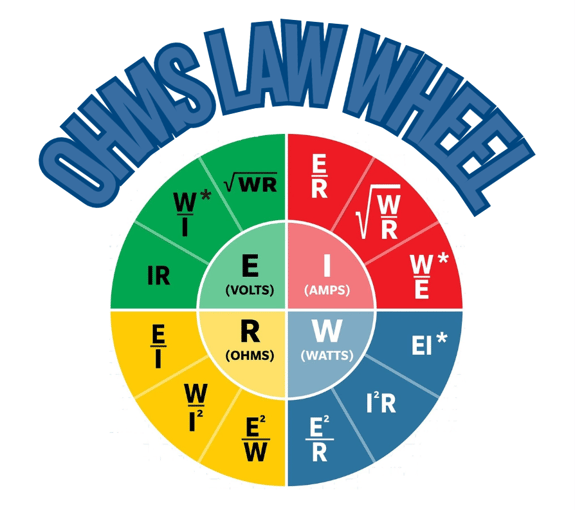
OHM’s Law gives us the formula:
Watts ÷ Volts = Amps
This relationship allows you to evaluate whether a circuit can support the heater you choose. For example, a 1500‑watt heater running on a standard 120‑volt circuit draws about 12.5 amps—an important consideration when planning your electrical load and available power.
General Rules of Thumb for Heating a Space
When sizing electric heat sources, these guidelines offer a reliable starting point:
12–15 watts per square foot of floor area
1–1.25 watts per cubic foot of total air volume
Square‑footage calculations work well for typical living spaces.
Cubic‑foot calculations are better for larger or taller industrial or utility-type spaces.
Example 1: Heating a 12' x 12' Room Addition
Let’s walk through a real‑world scenario:
Room Details:
Dimensions: 12 ft × 12 ft
Ceiling height: 8 ft
Insulated, used year‑round
Energy‑efficient windows on three sides
Step 1: Calculate square footage
12 ft × 12 ft = 144 sq ft
Step 2: Apply the wattage guideline
144 sq ft × 12 watts/sq ft = 1,728 watts needed
Result:
A 2,000‑watt heat source would efficiently heat this space, providing a bit of overhead for colder days or heat loss from the multiple windows.
Example 2: Heating a 25' x 20' Pole Barn
Larger spaces—especially those with higher ceilings, are best evaluated by volume.
Space Details:
Dimensions: 25 ft × 20 ft
Ceiling height: 15 ft
Insulated structure
Desired temperature: ~60°F
Step 1: Calculate cubic footage
25 ft × 20 ft × 15 ft = 7,500 cu ft
Step 2: Apply cubic‑foot wattage guideline
7,500 cu ft × 1 watt/cu ft = 7,500 watts needed
Result:
A 7,500‑watt heat source would be sufficient to maintain the desired temperature in this type of space.
Key Considerations When Determining Heating Requirements
While the guidelines above are helpful, every space is unique. Be sure to evaluate:
1. Space Size: Square Footage vs. Cubic Footage
Standard rooms: use square footage
Tall or large buildings: use cubic footage
2. Type of Space
Living spaces require more consistent, comfortable heat.
Utility or workshop areas may tolerate lower temperature targets.
3. Insulation Quality
No insulation = significantly higher heat loss.
Good insulation reduces wattage needs.
4. Windows and Exterior Walls
More windows = more heat loss
Larger glass areas or older windows may require additional wattage.
5. Number and Placement of Heat Sources
Large or open areas often benefit from multiple heat sources for even coverage.
6. Available Electrical Power
Using OHM’s law helps determine:
Circuit capacity
Voltage availability (120V vs. 240V)
Whether multiple circuits are required
7. Temperature Requirements
Maintaining 60°F in a workshop differs greatly from keeping a family room at 70–72°F all winter.
Accurately sizing your heating solution is essential for comfort, efficiency, and electrical safety. By applying simple formulas and evaluating the conditions of your space, you can determine the wattage needed to maintain consistent warmth—whether in a cozy room addition or a large utility building.
If you’d like help selecting the right heating solution or calculating heat needs for a specific project, feel free to reach out—a team member would be happy to help refine your specs.